

Credit: Ancy Alexander
Creativity knows no boundaries, and Ancy Alexander’s remarkable journey is a testament to this belief. Hailing from Dubai, Ancy is a multifaceted artist whose unique perspective as someone with Cerebral Palsy has illuminated her path as a writer, dancer, educator, and inclusive dance artist and instructor. Creativity Undefined spoked with Ancy about her artistic journey and evolution, challenges, achievements, and the profound impact of her work in promoting disability inclusion.
Ancy’s artistic odyssey began with an unexpected prescription – dance. Diagnosed with Cerebral Palsy from birth, she was enrolled in a Bharatanatyam class, a traditional dance form from South India. Under the guidance of Guru S Natarajan, she embarked on a dance journey characterised by kindness, foresight, and an unwavering commitment to inclusive education.
“It was pure luck that I started to learn dance under Guru S Natarajan. He had the kindness and foresight to accept and dispense dance education without bias to a student with a physical disability way before #inclusion and #inclusionmatters meant anything,” Ancy recalled. As a result, her early dance education broke stereotypes and laid the foundation for her artistic journey.
In her 20s, an enchanting Kathak performance by Dr. Guru Pali Chandra ignited Ancy’s desire to learn this North Indian dance form. Throughout her time with Dr. Chandra, the two women focused on nurturing Ancy’s dancing abilities rather than dwelling on physical limitations. Ancy further revealed that her circle of friends evolved during this period, including soul connections in dance like Shruti Rameshan, Dr. Vonita Singh, and Shereen Saif.
“Over time, I realised that dance is the sincerest form of communication with myself. My dance training keeps me happy and sane for the most part. A few years ago, I resumed training in Bharatanatyam. It was not easy to re-start dance training as an adult with a physical disability that hijacks balance and flexibility. My teacher Puja Unni, and other instructors at Spanda have been incredibly supportive in this journey,” she said, smiling.

Credit: Ancy Alexander
However, Ancy’s path was not without its share of challenges. She encountered unpleasant experiences with dance teachers both in her childhood and as an adult with a disability pursuing dance. Also, after observing that People of Determination were being used as ‘props’ by companies or being treated as sources of ‘inspiration porn’, the multi-faced artist decided get specialised training in the US.
“[After] observing dance classes for People of Determination used as CSR motion posters, and an increasing trend of dance performances by people with disabilities being blatant inspiration porn directed me to the US to get trained in teaching and choreographing inclusive dance. I now conduct inclusive dance and creative expression sessions for adults and teenagers with disabilities in Dubai,” Alexander explained.
She further revealed that her experience working with a visually impaired participant during her training in the United States was pivotal. It underscored the importance of clear communication and understanding the support requirements of People of Determination. This experience informs her approach to inclusivity in the arts.
“Teachers of dance, music, drama, and other performing arts should be encouraged and supported to include People of Determination in their classes. It will also be helpful if these instructors can access free training and information on handling students with disabilities in one-on-one or group classes. Creating an inclusive environment in arts at the grassroots level will be helpful,” she observed, adding that: “I try to incorporate elements from this experience in the classroom when I am teaching and, on the dancefloor, when conducting a class or workshop to introduce the idea of understanding the nature of support required by People of Determination in everyday settings and extending it respectfully and mindfully.”

Credit: Ancy Alexander
Beyond her dance journey, Ancy’s artistic portfolio extends to writing and education. Writing, which she enjoyed in school, became a valuable skill in her career as a public relations professional. Over the years, her experiences resulted in a position as an adjunct lecturer that allowed her to share her love for storytelling and the joy of sharing knowledge.
When asked about her proudest achievements, Ancy revealed that she doesn’t believe that she’s reached any notable milestones in dance yet, given the challenges posed by her physical disability and the need to maintain a full-time job to support her dance efforts. However, her work in conducting inclusive dance workshops in Dubai is a source of immense pride. Each session offers an opportunity to explore creative expression and mindful movement for People of Determination.
She also acknowledged that creative opportunities can be limited for artists with disabilities, particularly in the Middle East. To counter this, she has taken the initiative to create her own breaks: “To be honest, there are not a lot of opportunities where I am creatively challenged or can feel a sense of fulfilment as a performing artist with a disability in this part of the world. For now, I am still finding ways to create my own opportunities. Last year, I played Beatrice in a play, and that was my first ever non-dance theatre experience with some difficult lines to remember. That can be considered pushing my creative boundaries.”
To Alexander, everyday life, accessibility, and societal trends related to disability inclusion are significant sources of inspiration. She is particularly intrigued by the themes of romance and intimacy in the lives of People of Determination, and her work is a testament to her commitment to exploring these aspects through her art.
“When actively training in Kathak, I got comfortable performing expression-based pieces. I did not realise that it became my way of concealing and not addressing the quirks in [or] uniqueness of my movements due to Cerebral Palsy when I dance. A way to hide from the physical ability required for dance,” she observed.
Ancy went on to share how her approach to dance evolved: “I still enjoy watching and presenting stories through expression-based pieces where you get to dive deep into the nuances of character and landscape of the story, but also interested and invested in embracing every ounce of my physical capacity in dance and finding ways to move mindfully, intelligently, and aesthetically with my condition be it while training in Bharatanatyam or when teaching open-style choreography during an inclusive dance class.”

Credit: Ancy Alexander
Today, she seeks to embrace every facet of her physical capacity in dance, whether it’s training in Bharatanatyam or teaching open-style choreography in inclusive dance classes. Ancy emphasizes the role of acceptance in her artistic growth, acknowledging that she remains critical of her dance but has come a long way.
“To stay true to a style, with or without pushing boundaries, you start by showing up for class and practicing. While pursuing a particular dance style with a disability, it is useful to try and find adaptive alternatives for movements instead of avoiding them. For example, spins are problematic for me. What I do instead in Bharatanatyam is take three to four small steps to complete a small circle,” she revealed.
Ancy continued: “To move from standing to floor level and back to standing, I use my hands in contemporary dance but have yet to find an aesthetic and safe way to change levels when dancing Kathak or Bharatanatyam.”
Living with Cerebral Palsy has given Ancy a unique perspective on disability and inclusion. She laments the misconceptions that many in the mainstream population harbour about People of Determination, often underestimating their capabilities and resorting to treating them like children.
“When I perform, present, create, or write, I do not expect sympathy for my disability but for my craft to have a conversation with the audience,” she said firmly.
Alexander noted that her artistic evolution is an ongoing process, and her vision for the future is inspiring. Along with celebrating the small wins, she intends to continue conducting inclusive dance workshops, emphasising creative expression and mindful movement. Furthermore, she aims to create and present meaningful performance pieces that encourage the acceptance of disability in the performing arts.
“Some small wins are when an individual with a disability responds to a dance instruction after multiple classes where they show no interest in movement or a person with a disability who does not enjoy dance takes an interest in learning choreography. These breakthrough moments assure me that I am on the right track with inclusive dance and help me focus on the benefits of slow and steady progress instead of being lured by short-term performance highs,” Ancy said smiling.
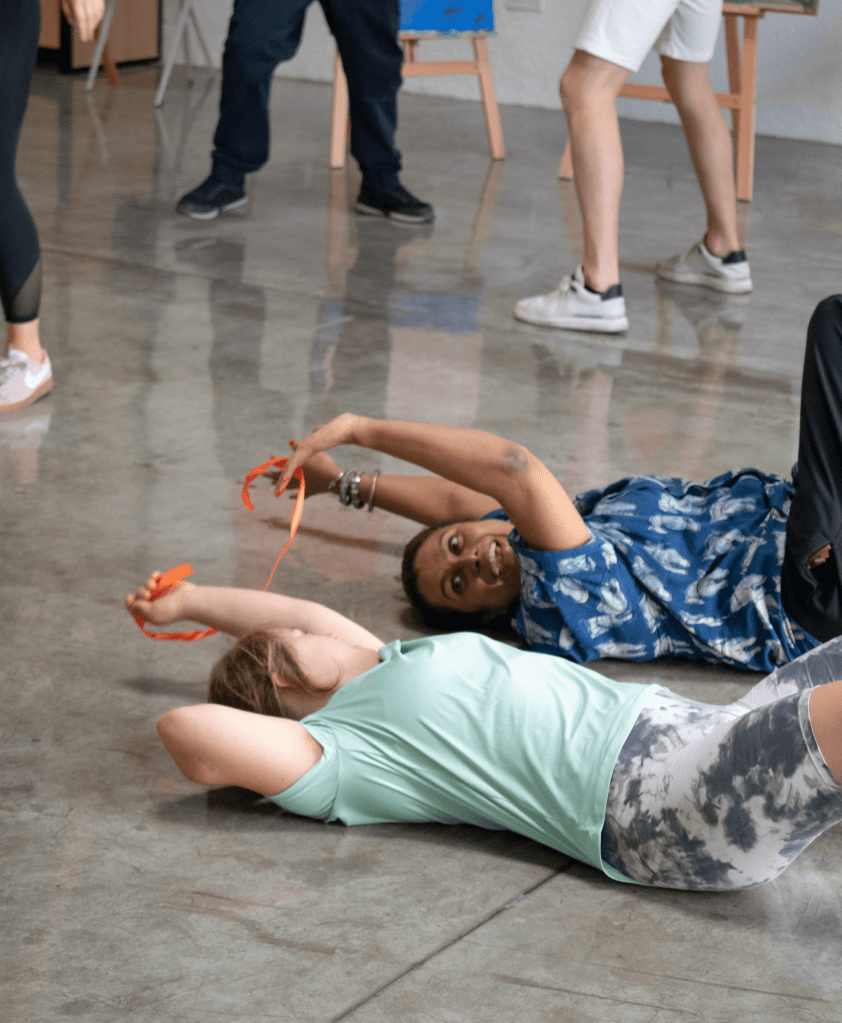
Collaboration is another facet that lies at the heart of Ancy’s vision for her art. She envisions working with both disabled and non-disabled artists from around the world, reinterpreting old stories with an inclusive twist and creating new narratives that challenge stereotypes surrounding disability.
“Collaboration is a great way to create compelling artistic work. I would love to work with disabled and non-disabled artists across dance and theatre from around the world to retell old stories with an inclusive flavour and new ones that challenge stereotypes around disability,” she said.
Credit: Ancy Alexander
Balancing multiple roles as an artist can be challenging, especially when navigating the unique challenges associated with Cerebral Palsy. Ancy acknowledges that there is no one-size-fits-all answer to finding equilibrium. But at the same time, she recognises the potential of digital tools in enhancing accessibility in the arts, particularly for individuals with disabilities.
“The digital tools I am interested in and keen to use are visual tools that can give cues to people with hearing impairment and sensory cues to individuals with vision impairment. I’ll need to work with these tools to share challenges, if any. The advantage would be dance being accessible to people of all abilities,” she noted.
While society’s awareness of social issues, including disability rights, is growing, Ancy believes that there is much work to be done. Her art serves as a catalyst for change, encouraging a culture of acceptance rather than sympathy for individuals with disabilities: “Staying committed to dance and creating a body of work for audiences around the world to move towards becoming a society where talented individuals with disabilities don’t have to second guess pursuing a career as a performing artist, where disabled students are not turned away from school or music class, dance class, acting class, or any other class for being unmanageable is the way forward.”
For emerging artists, especially those with disabilities, Ancy’s advice is empowering: “Having a disability is not an identity. No one else can define the limit of your talent and capability, and what you can and cannot do with it.”
The most impactful advice Ancy received was a simple “Why not?” when she asked if she could learn Kathak. This phrase has become her mantra, a reminder to defy self-doubt and embrace possibilities. Conversely, a remark about her confidence overshadowing her disability served as an unhelpful reminder of societal biases.
“Someone once told me my confidence overshadows my disability, which makes it difficult for people to feel sympathy for me or want to help me. That is the least helpful thing in the long list of not-helpful things I have heard,” she said, shaking her head.
Ancy’s personal philosophy is a testament to her indomitable spirit: “Tell me I can’t, and I’ll show you I can.” It’s also good advice for any Person of Determination who is considering pursing any artistic path: “Having a disability is not an identity. No one else can define the limit of your talent and capability and what you can and cannot do with it. Having a disability is also not a license to be mediocre and opt-out from learning, evolving, and putting in the work.”
For now, Ancy’s focus is on conducting inclusive dance workshops in Dubai. She aims to expand these workshops across the UAE, reaching more individuals with disabilities and fostering creativity. Beyond that, over the next five years, she aspires to create performances that promote mindful inclusion and challenge stereotypes while using her skills and experience as a writer and speaker to strengthen her call for inclusivity in both the community and the arts.
“I am trying to be regular with my training in Bharatanatyam to get fit and confident enough to present a dance recital. I believe performing actively again will be walking the talk on dance being accessible for all abilities. I [also] hope to perform in and create dance and theatre projects that encourage mindful inclusion in the community and arts and challenge the narrative, especially in South Asian communities, that dance is not for people with disabilities,” she said, smiling.
Ancy Alexander’s artistic journey is a tapestry of resilience, creativity, and inclusivity. Her dedication to fostering a more inclusive arts community and challenging stereotypes surrounding disability is an inspiration to us all. As she continues to create, educate, and advocate, Ancy reminds us that art knows no boundaries, and true inclusion is achieved through unwavering determination.
 CREATIVITY UNDEFINED